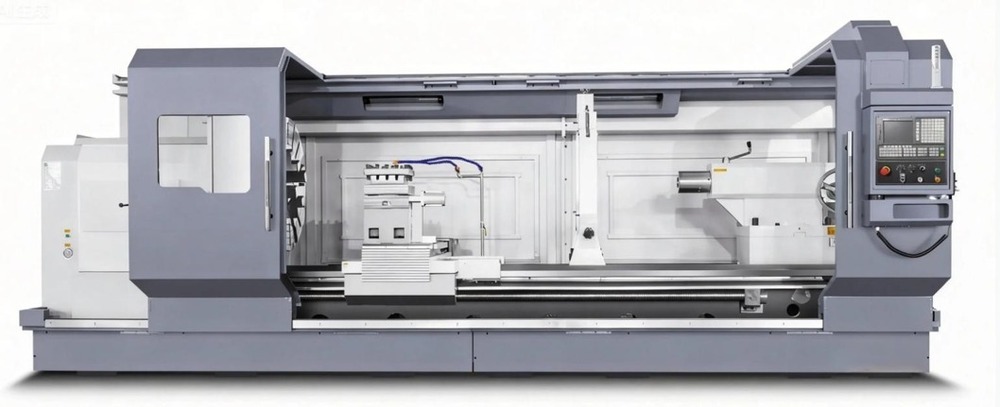
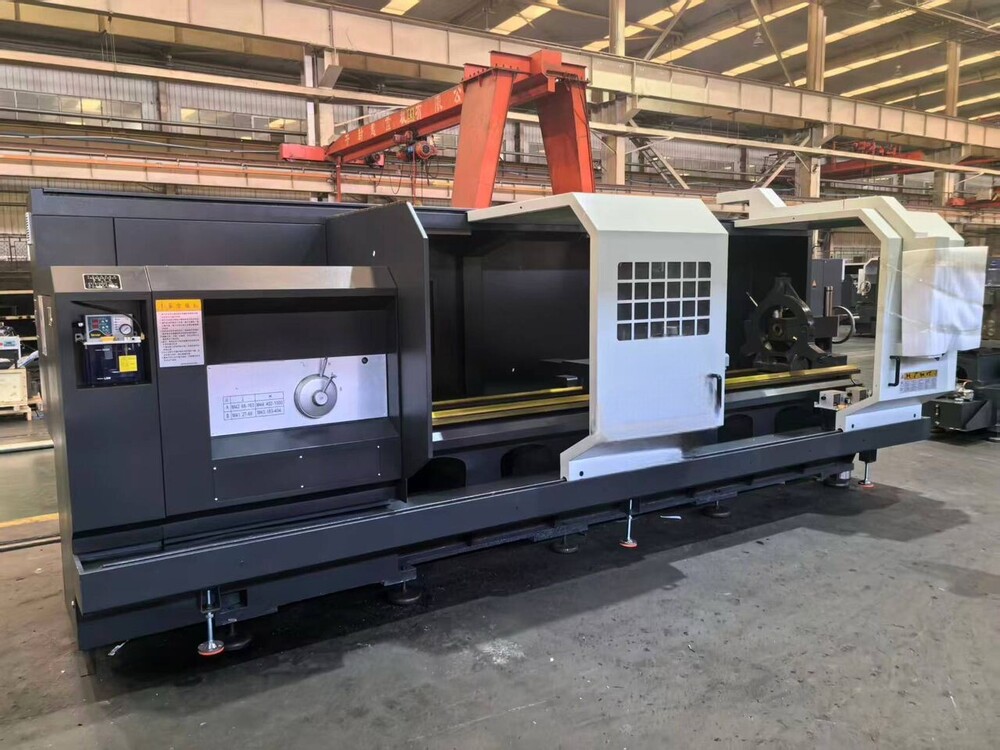
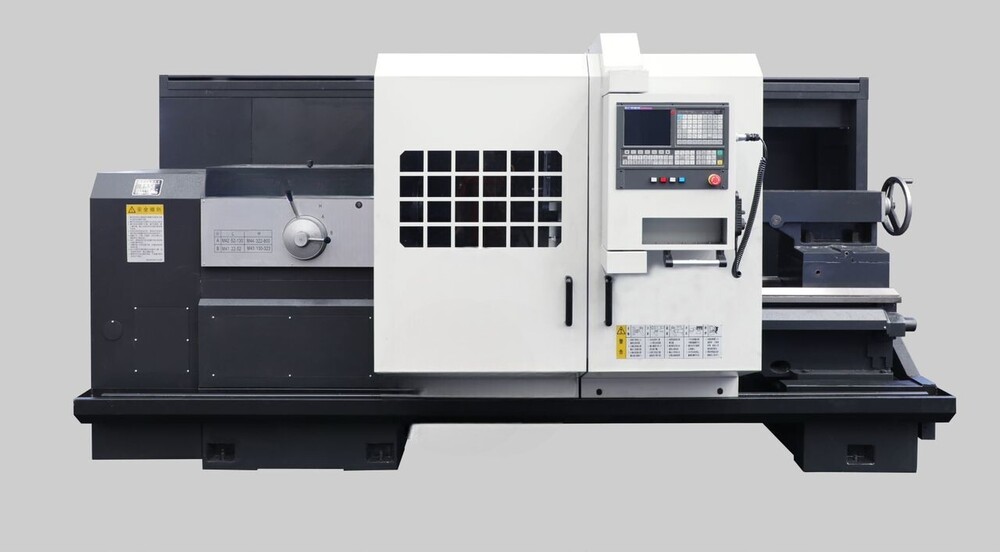
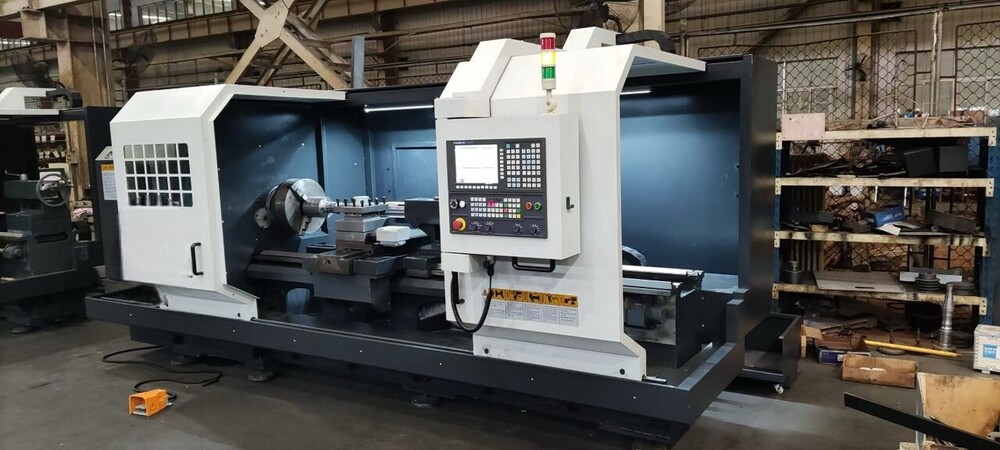
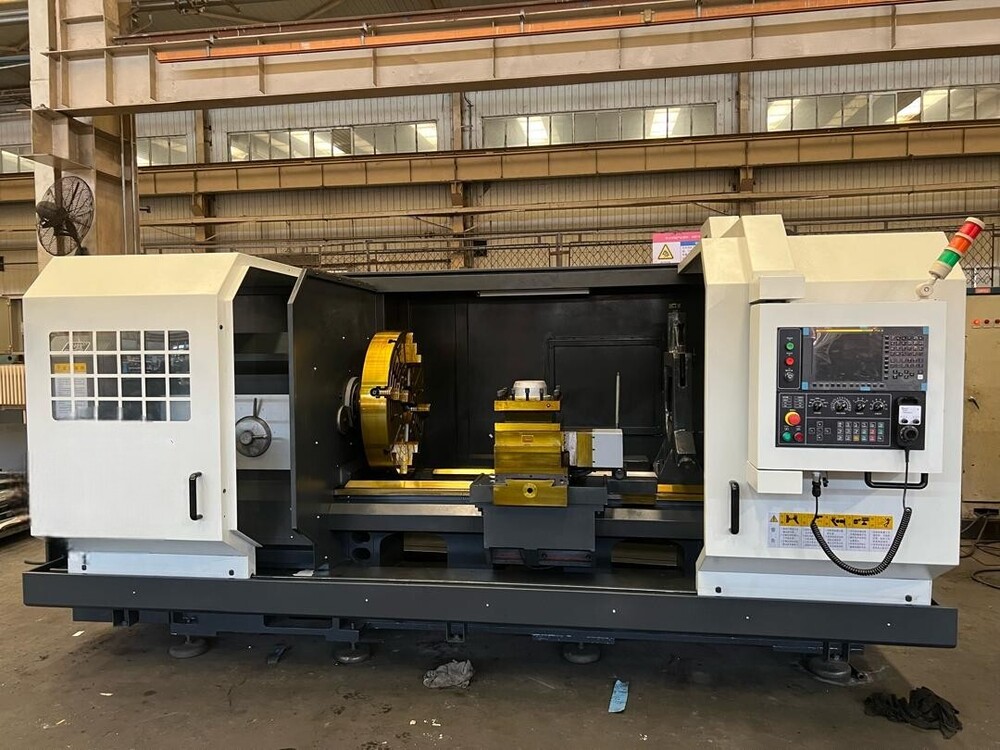
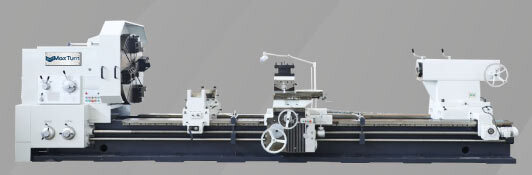
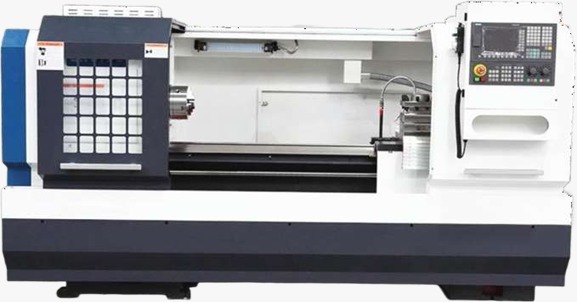
About Heavy Duty CNC Lathe Machine
| Swing Over Bed |
500-600 mm |
| Turning Length |
1000-3000 mm |
| Spindle Bore |
82-160 mm |
| Bed Type |
Flat Bed |
| Chuck Size |
250-315 mm |
| Machine Weight |
1700-2100 kg |
| Automation Level |
Fully Automatic |
| Application |
Railway, Roll Turning, Shaft Turning, Oilfield, Heavy Jobbing |
Features: Machine Structure cast in High Standard cast iron (HT300) Induction Hardened Bed Guideways 48-52 HRC Turcite coating in carriage slide ways Heavy duty NN Series Bearing In Spindle Gears Induction Harden and Ground External Pump for Headstock lubrication Double Nut Ball screw in X and Z axis High Quality Electric Switchgears
Additional Information:
Precision Machining for Demanding IndustriesThis CNC lathe delivers exceptional performance for heavy-duty operations across automotive, aerospace, railway, and machinery sectors. With hardened guideways, automatic tool changer, and advanced digital control, it handles large workpieces efficiently and ensures high repeatability, making it a preferred choice for high-precision metalworking tasks.
Customizable to Fit Your Production NeedsAvailable in a variety of configurations, our CNC lathe offers options for spindle bore, chuck size, and control systems to meet specific project requirements. Whether you need manual or programmable tailstock or are aiming for varying power consumption, this equipment adapts effortlessly, supporting a range of machining capabilities and workpiece dimensions.
Advanced Automation and Safety FeaturesEquipped with integrated coolant and lubrication systems, and enclosed working area, the lathe promotes efficiency and safety. Automated tool turret (4 or 8-station) accelerates production cycles, while the digital control panel streamlines operation. Optional bar feeder and PLC controls further enhance automation and productivity without compromising on safety.
FAQ's of Heavy Duty CNC Lathe Machine:
Q: How does the integrated coolant system benefit the machining process on this CNC lathe?
A: The integrated automatic coolant system efficiently manages heat buildup during machining, prolonging tool life, maintaining workpiece accuracy, and reducing wear on machine components. This ensures consistent high-precision output, especially during prolonged heavy-duty operations.
Q: What industries typically use this heavy-duty CNC lathe machine?
A: This CNC lathe is extensively used in the automotive, aerospace, railway, and heavy machinery industries for metal turning, facing, threading, and other robust machining tasks that demand precision and reliability.
Q: When should a programmable tailstock be chosen over a manual option?
A: A programmable tailstock is recommended for applications requiring repetitive, automated positioning or when processing varied component lengths, increasing productivity and consistency. Manual tailstocks are suitable for more straightforward, less frequent adjustments.
Q: Where can I install this CNC lathe, considering its size and requirements?
A: The CNC lathe should be installed in an industrial machine shop or manufacturing facility with proper electrical infrastructure (380V/415V, 3 Phase), floor space for its dimensions, and sufficient ventilation. Dimensions vary per customization and site readiness is essential for safe operation.
Q: What control systems are available, and how do they affect operation?
A: Customers can choose Siemens, Fanuc, or Mitsubishi CNC systems, each providing intuitive programming, reliability, and compatibility with industry standards. The choice often depends on existing factory automation preferences or operator familiarity.
Q: How is high precision and repeatability achieved in this lathe?
A: Features like induction AC servo motors, automatic centralized lubrication, hardened guideways, and rigid cast iron bed minimize vibration and maintain alignment, delivering 0.003 mm repeatability and consistently precise results.
Q: What are the main benefits of using the automatic tool turret on this CNC lathe?
A: The automatic tool turret (4 or 8-station) enables quick tool changes, reducing downtime and enhancing production speed while supporting a variety of machining operations without manual intervention.




 Send Inquiry


 Send Inquiry